Knoxville Dog Obedience

Free referral service

Dog obedience training in Knoxville that holds up on a busy sidewalk.

Sit in the kitchen is easy. Sit outside a Market Square patio on a Saturday is the real test. Here is the order skills get built in, what each one should look like around town, and how to pick between classes, private lessons and board and train.

Request a Knoxville trainer Walk the skill ladder

Who we are: K9 Professional Network Inc. (K9PN) runs this free referral site. K9PN does not train dogs. Your request goes to an independent trainer who serves your area.

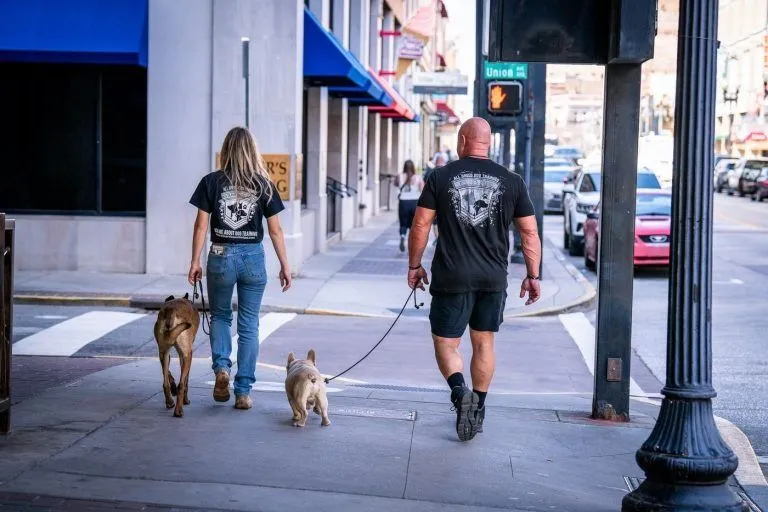
Two trainers heel-walking two dogs on a downtown Knoxville sidewalk
A Knoxville-area trainer we work with, heel-walking on a downtown sidewalk.

The skill ladder: what to build first, and what it looks like in Knoxville

Skills stack. Each rung leans on the one before it, so skipping ahead is how owners end up with a dog that recalls in the yard and ignores them on the greenway. Pick a step to see the real-world picture.

Sit and down

Setting: the curb at a crosswalk, waiting for the signal.

These are your dog's first handles: easy to teach, easy to reward, and they give you a way to say "stop doing that, do this." Aim for a quick sit that holds until you release it, and a down that stays down while you shift your weight or turn away.

What good looks like: your dog sits at the curb without being asked and waits for your release before stepping off.
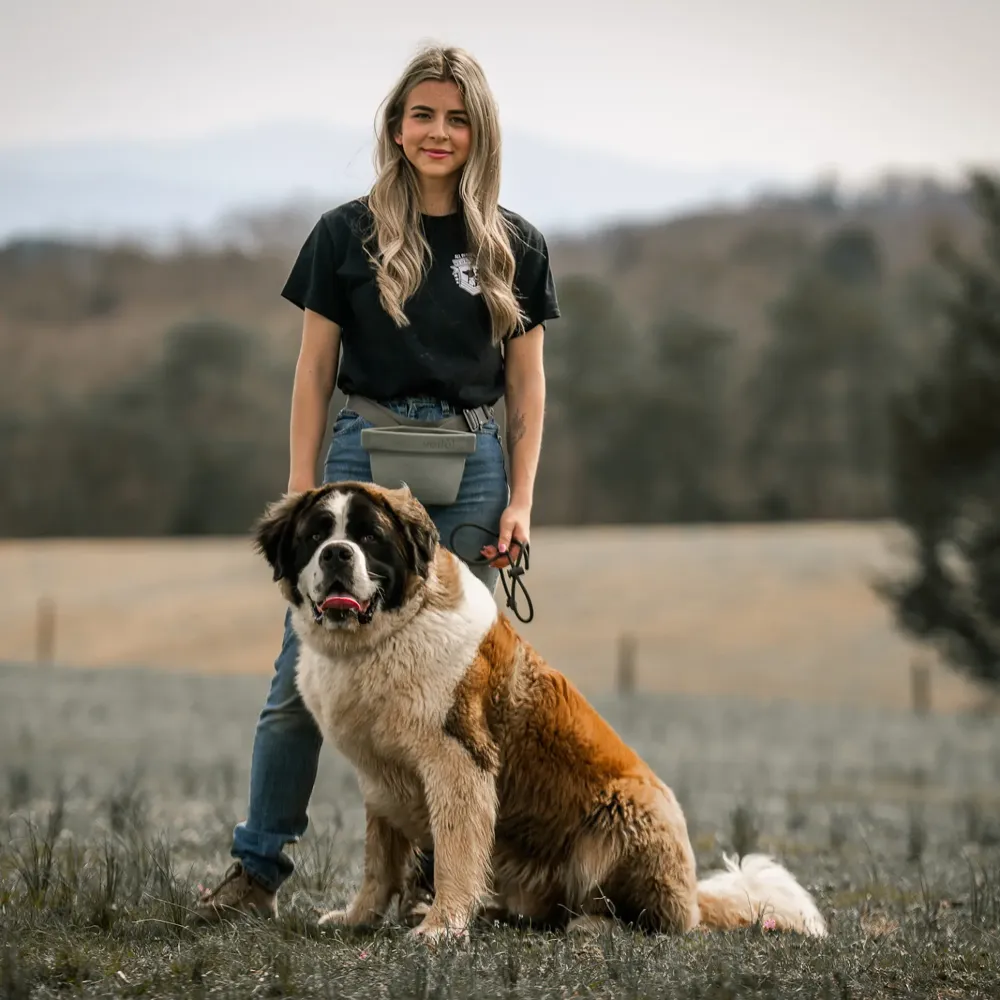
A trainer standing behind a large brown and white Saint Bernard sitting calmly in an East Tennessee field
A Knoxville-area trainer we work with, with a Saint Bernard.

Place

Setting: a patio table where you want a settled dog, not a roaming one.

Place means "go to that spot and relax until I say otherwise." A mat, a bed or a low bench all work. It is the skill that makes cafe patios, front porches and visitors at your door manageable, because the dog has a job instead of a guess.

What good looks like: your dog settles on its mat for ten minutes while you finish a coffee.

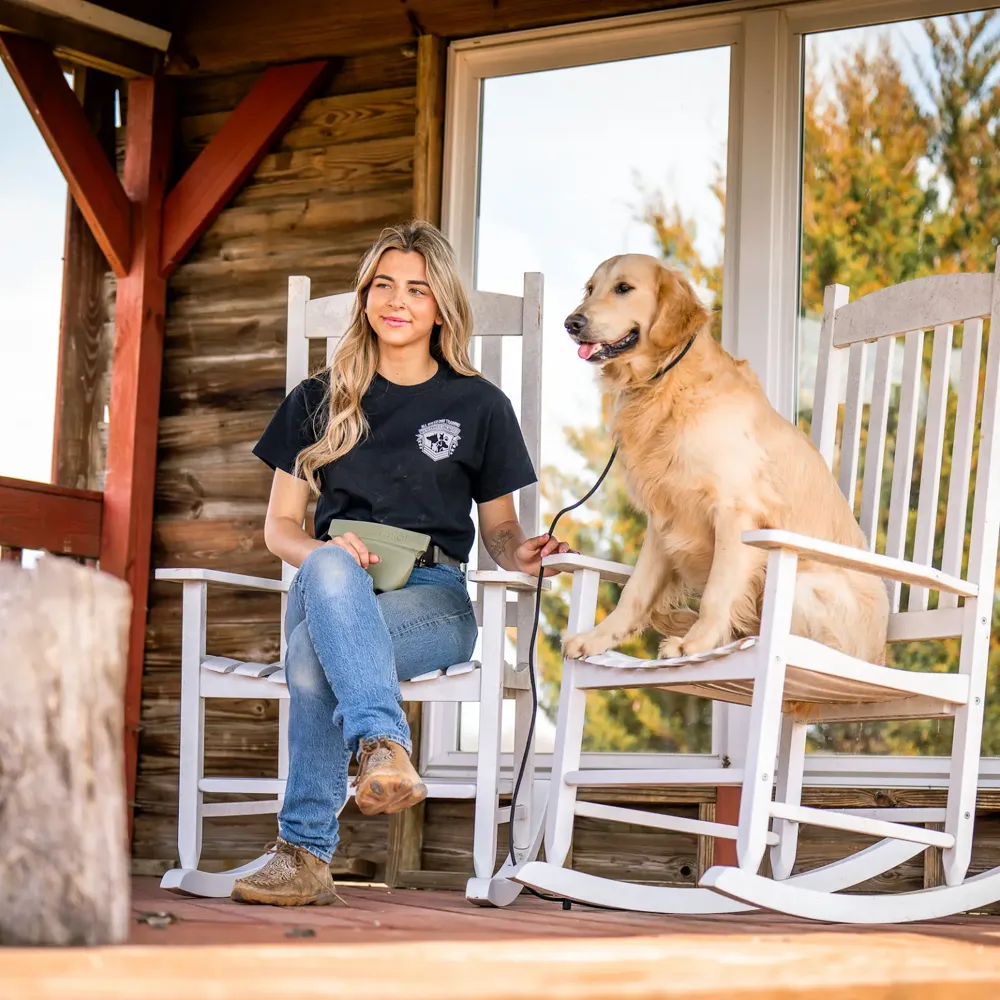
A trainer in a white rocking chair on a log-cabin porch with a golden retriever resting beside her
A Knoxville-area trainer we work with, with a golden retriever.

Loose-leash heel

Setting: Gay Street sidewalk past patios, doorways and other dogs.

Loose-leash walking means a slack line and a dog who checks in on you. A formal heel is the tighter version, with the dog right at your side, which is handy at crossings and in narrow spots. Build both in quiet places first, then add one new thing at a time: a driveway, a bench, a busier block.

What good looks like: the leash makes a smile shape, and your dog turns with you at the corner without a tug.

Two trainers heel-walking two dogs along a downtown sidewalk
Trainers we work with, heel-walking downtown.

Come when called

Setting: a greenway trail where a squirrel or a jogger appears without warning.

A reliable recall is the skill owners want most and build too fast. Start indoors on a long line, pay generously, and never use the word to end the fun. Then work up through the yard, the long line at a park and quieter trail stretches. A recall that has not been proven around distractions is a hope, not a recall.

What good looks like: your dog spins toward you the moment it hears its cue, even with something exciting nearby.

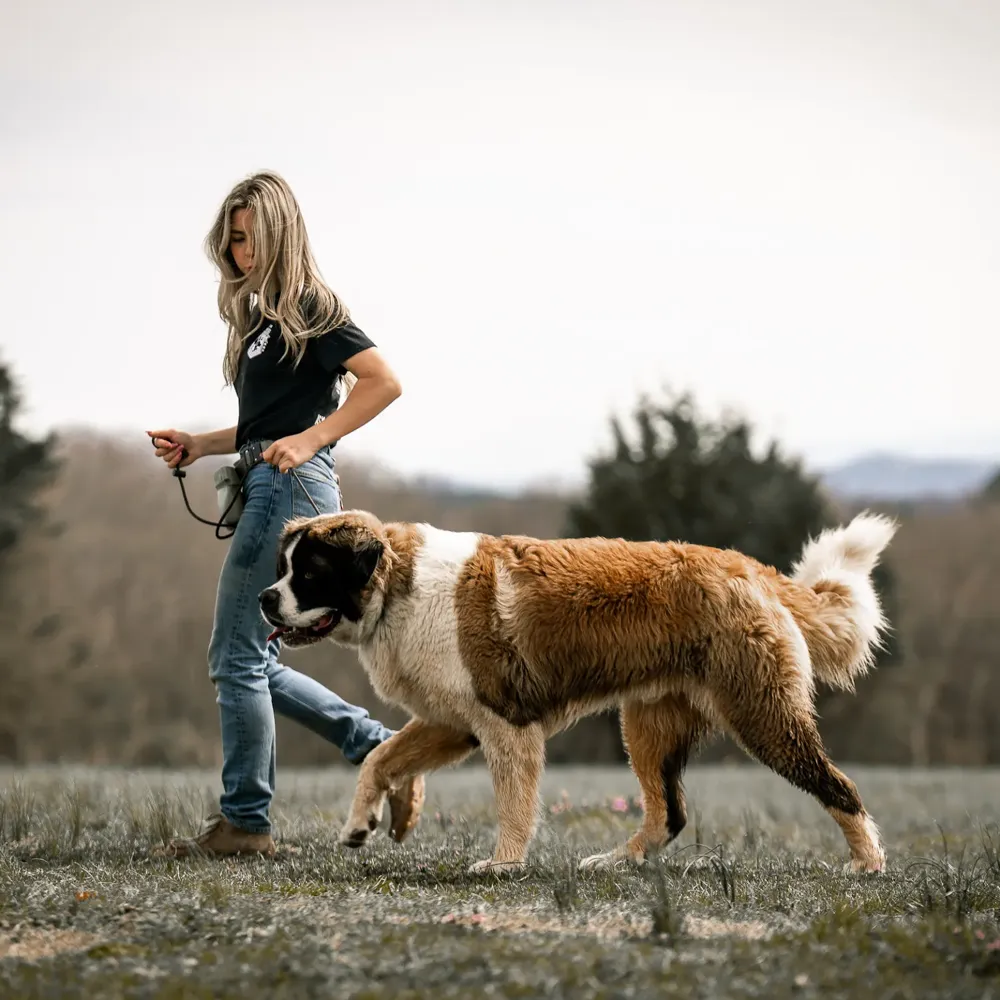
A trainer walking a large brown and white dog on a loose leash across an open field
A Knoxville-area trainer we work with, walking a Saint Bernard.

Stay and leave it

Setting: dropped food or a friendly stranger's hand near the Market Square fountain.

Stay teaches your dog to hold a position through time, distance and your movement. Leave it teaches your dog to look away from a tempting thing and look at you instead. Together they prevent most of the scary moments: grabbing litter, bolting through an open door, lunging for a dropped chicken wing.

What good looks like: your dog ignores food on the ground and turns its eyes to you for the payoff.

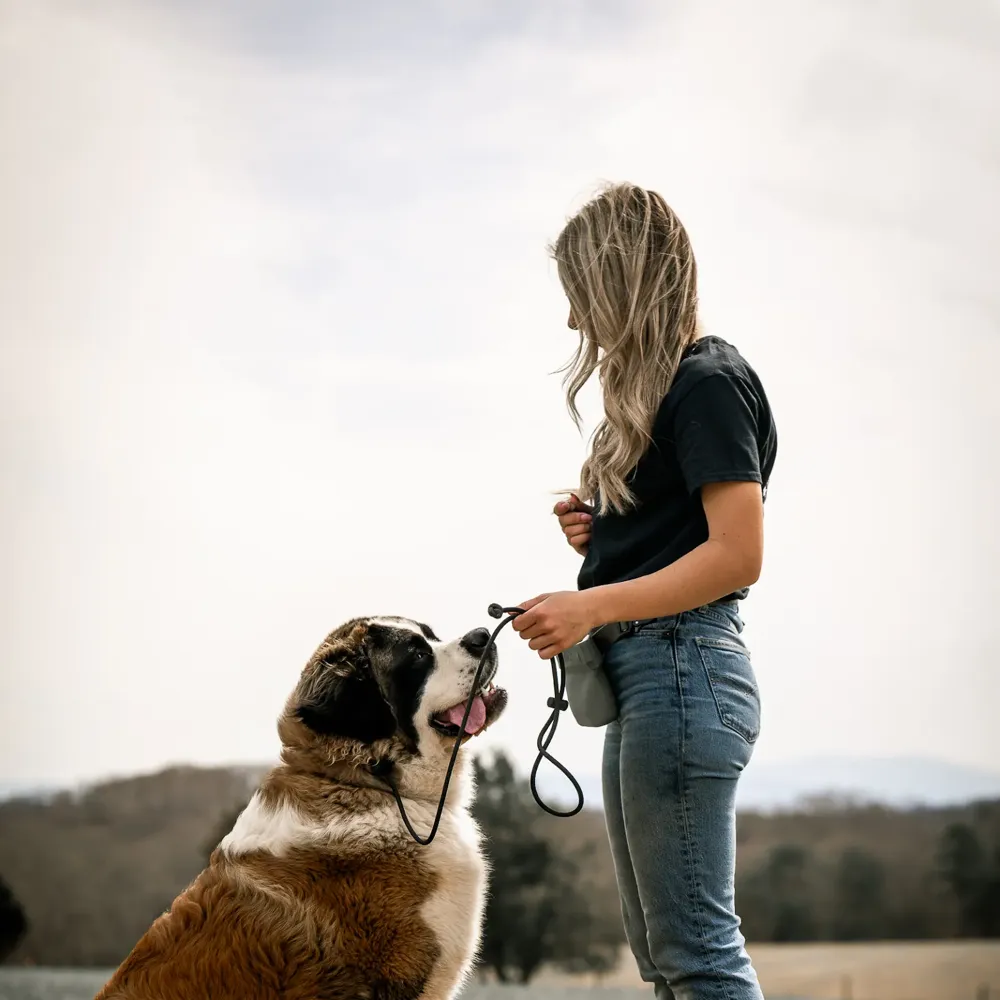
A trainer holding a leash while a Saint Bernard looks up at her
A Knoxville-area trainer we work with, working on focus with a Saint Bernard.

Distractions

Setting: the edge of a Saturday crowd, music playing, strollers going by.

Every earlier skill gets re-tested with the world turned up. You add distance from the crowd, then duration, then closeness. Success here is boring on purpose: a dog that does the ordinary things calmly while Knoxville happens around it.

What good looks like: sits, heels and recalls still work when you are twenty feet from a busy sidewalk.

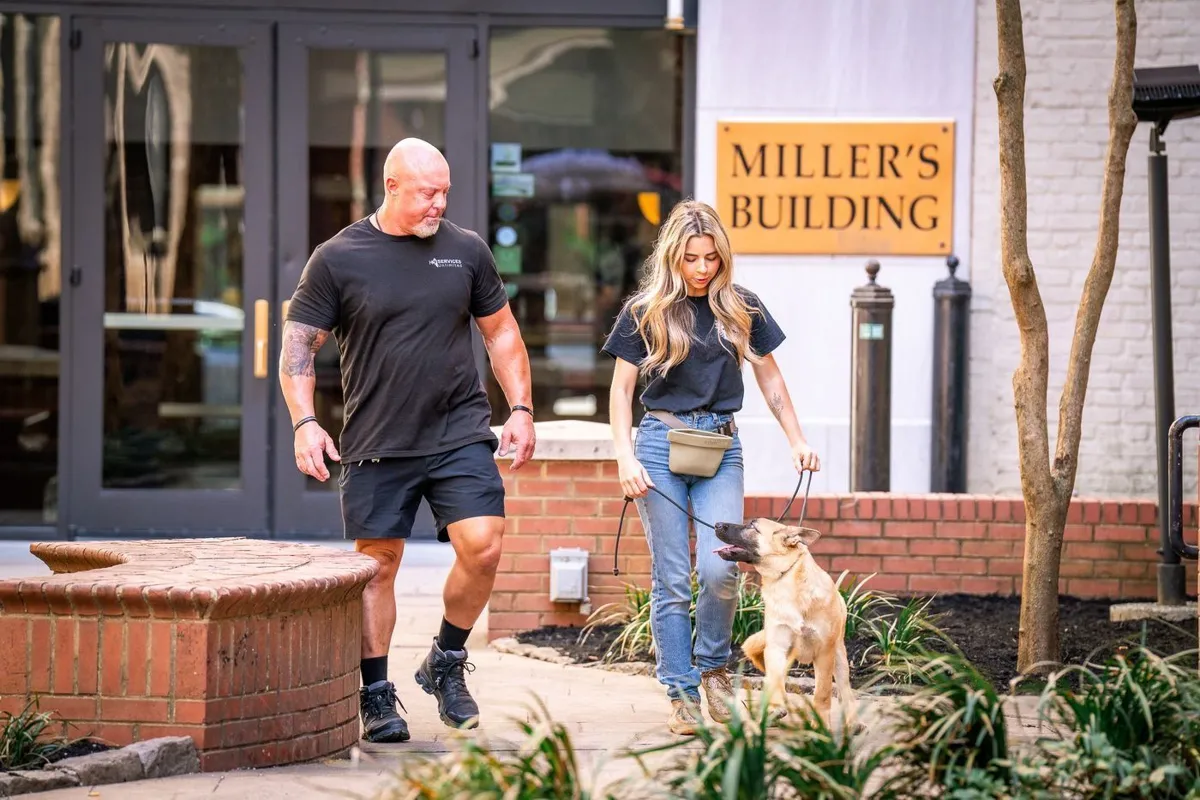
Trainers walking dogs past the Miller's Building in downtown Knoxville
Trainers we work with, walking dogs downtown.

Class, private lessons or board and train

All three can work. The right one depends on your dog, your schedule and what you need fixed. Read the Knoxville obedience class guide for more on group options.

Group class

Best for healthy, social dogs with basic goals. Classes meet weekly over several weeks and come with homework, so the real training happens between sessions. You get a distracting environment built in. It is a weaker fit for a dog that is nervous or reactive around other dogs.

Private lessons

Best for leash pulling, recall problems, puppies and a household plan. Sessions are usually weekly, at home or with the trainer, so the work is aimed at your dog and your routine. See the private dog training guide.

Board and train

Best for busy owners and strong habits. Your dog stays with a trainer, commonly about 4 to 6 weeks, and you get lessons at pickup so the skills transfer to you. In the Knoxville area it commonly runs about $2,000 to $5,000, and each trainer sets their own prices. Details in the board and train guide.

Dog training is not a licensed profession in most places, so ask for a written plan and a clear price, and be wary of anyone who guarantees results. Our guide to choosing a trainer has questions to ask.

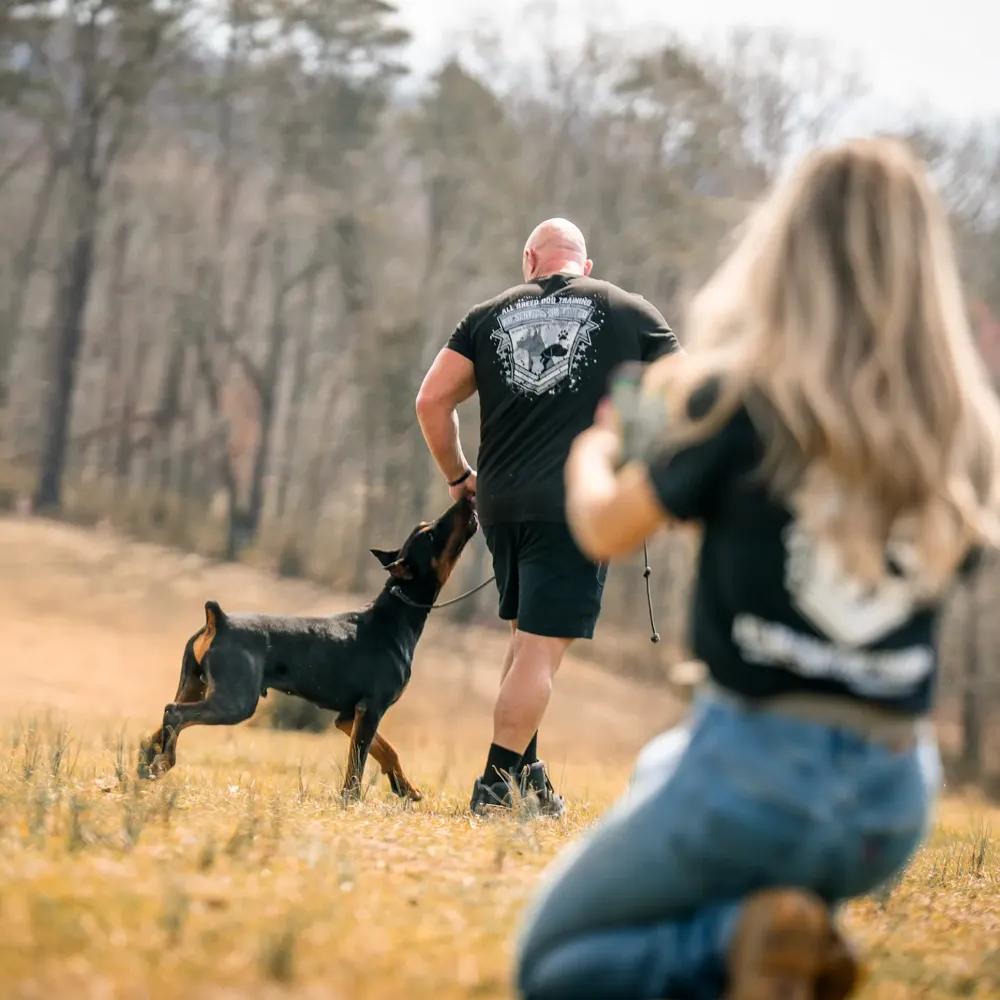
Two trainers working a Doberman on a field
Trainers we work with, working a Doberman.

Working toward off-leash

Off-leash is the reward for reliability, not a shortcut. Get recall, stay and leave it solid on leash and long line first, and only then loosen the line.

Know the rules too. Leash rules apply in most public places in Knoxville and Knox County, so off-leash work usually happens on private land or in places where it is allowed. Rules can change, so check the current ones before you unclip anything.

Read the Knoxville off-leash training guide for the longer version.

Questions Knoxville owners ask

Which commands should we start with?

Start with sit, down and place, then loose-leash walking. They are the most useful and the easiest to reward. Recall, stay and leave it come next, with distractions last.

How many weeks does obedience training take?

It varies by dog, age and your practice time. Group classes run weekly over several weeks. Good board and train programs usually run about 4 to 6 weeks. Nobody can honestly promise a result; consistent practice at home decides most of it.

What age can a dog start?

Puppies can start basics as soon as they are settled in at home, using short, playful sessions. Older dogs learn too. See the Knoxville puppy training guide.

Does K9PN train my dog?

No. K9PN is a free referral service. Your request goes to an independent trainer who serves your area, and trainers set their own prices and programs. Virtual training is not available in Tennessee.

Ready to find a Knoxville trainer?

Tell us about your dog and what you want to fix. Fill out the short request form; there is no phone number to call.

Request a Knoxville trainer