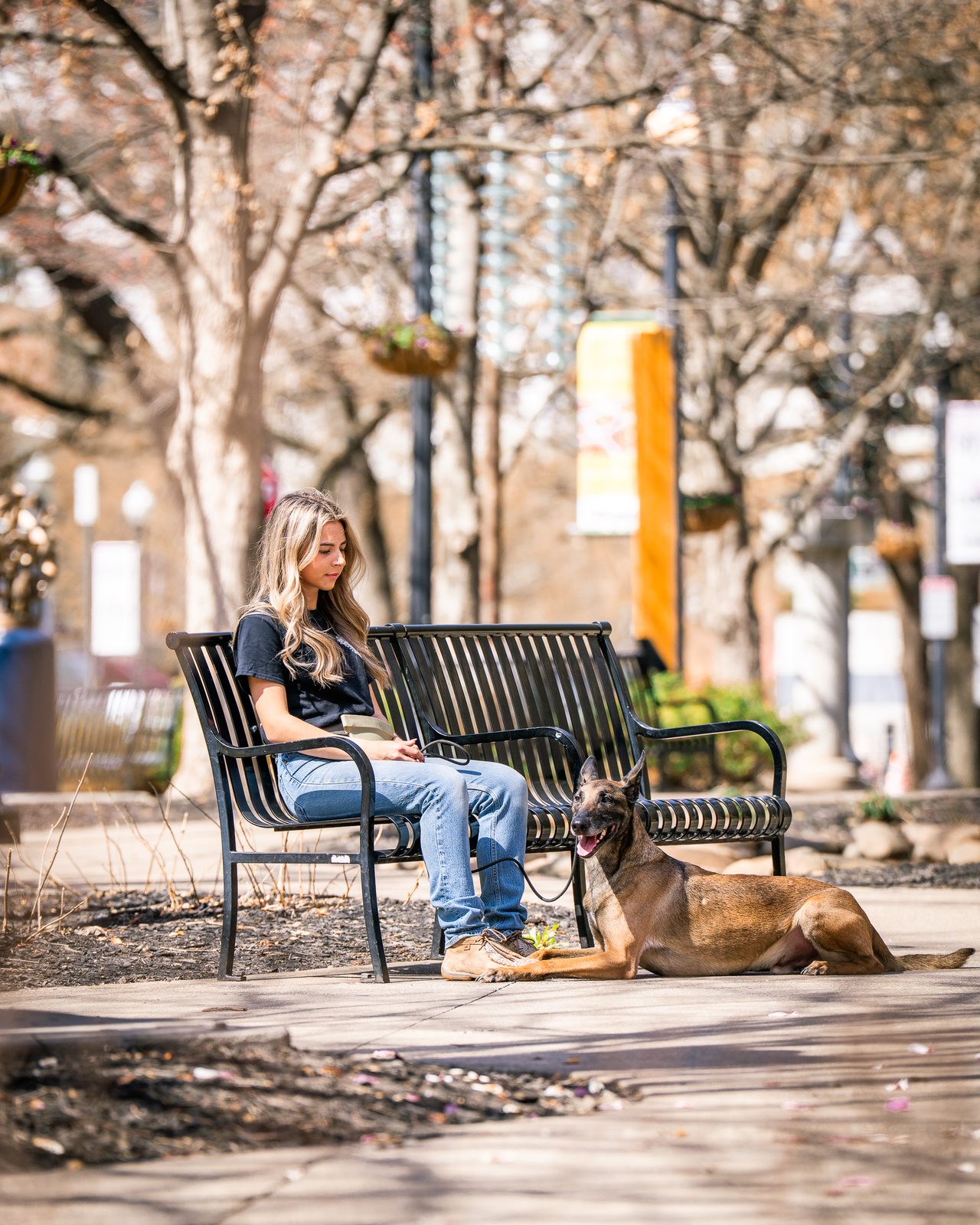
River walks and Main Street. Manners for a town built around both.
Clinton's downtown and its stretch of the Clinch River invite plenty of strolling. Dogs on those walks meet other walkers, benches, fishing gear and the occasional squirrel. Loose-leash walking, a calm sit on request and a gentle approach to strangers are the most useful skills, especially for owners who like to walk with friends.
Riverfront paths are good practice grounds on quiet days, provided your dog stays leashed and you leave a respectful distance from the water at first. Downtown sidewalks add another layer with doorways and benches. Clinton Highway and Interstate 75 produce a lot of traffic noise, so introduce those areas slowly.
One practice idea is the doorway pause: at every threshold, ask for a sit and wait for a release before moving through. It cuts down on pulling and teaches patience. Staying with the same trainer through every stage keeps your questions answered, and a free estimate request is a good moment to begin.
How it works. Three simple steps.
- Fill out the short estimate form with your town and what your dog needs.
- Your request is reviewed and you are referred to a trainer based on your dog's needs and your area.
- You get a callback to talk through your dog and an estimate for the right program.
Nearby communities. Also covered.
Why owners choose this
One trainer. Your dog. Real results.
We do not refer owners to franchise training chains. In our view, they lean on less experienced staff and indoor facilities instead of real-world training.
Good questions
Before we begin.
How do I stop pulling along the river path?
Reward your dog for staying close and pause whenever the leash tightens. Consistent practice on quiet stretches carries over to busier ones.
Can I practice downtown with my dog?
Yes, at quiet times, once basics are steady. Begin with short visits.
Will my dog learn to ignore fishing gear?
A leave-it cue and rewards for staying focused help. Keep your dog at a distance at first.