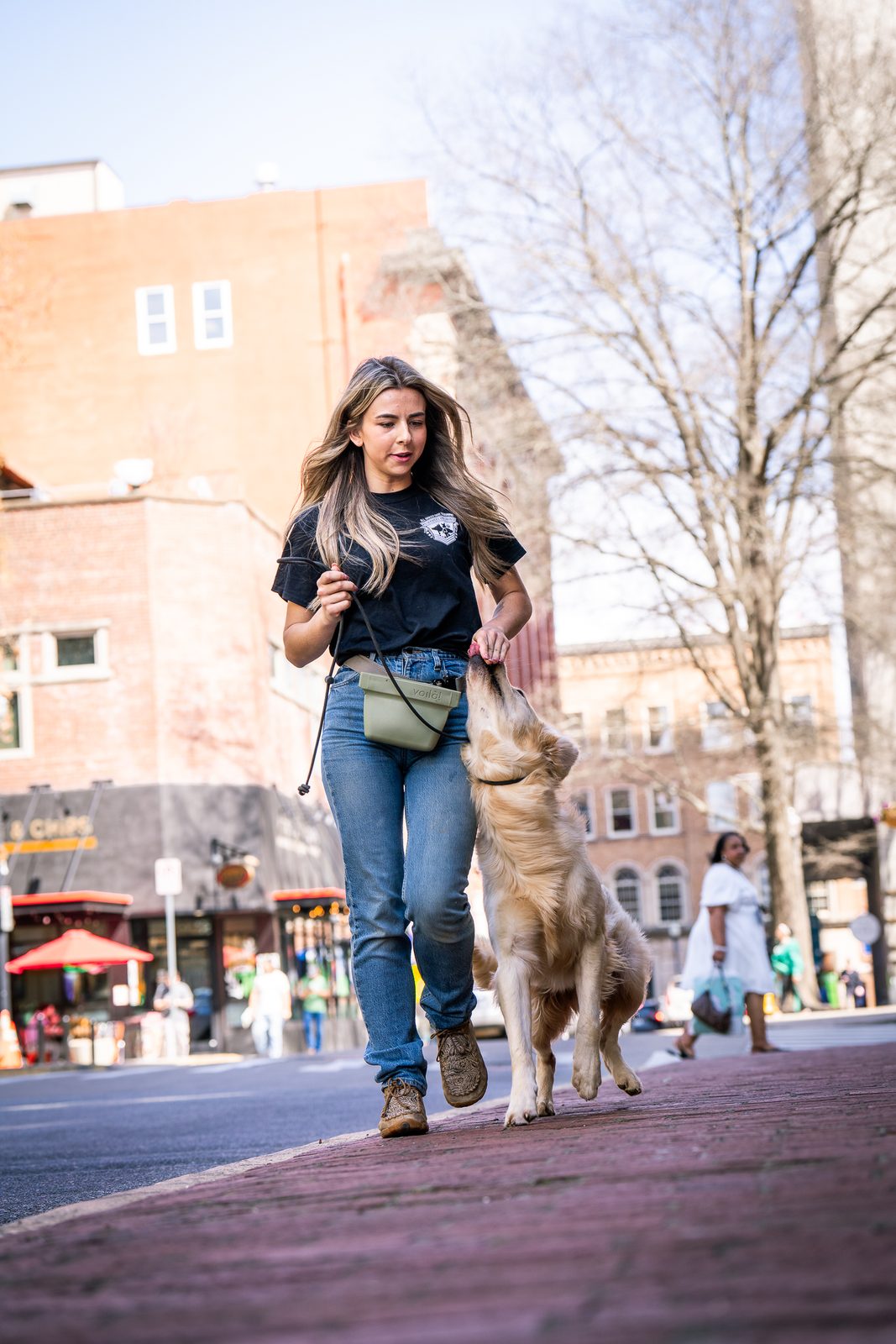
What makes a walk go smoothly
- Teaching heel and loose leash as separate skills, one in tight focus and one for everyday strolling
- Rewarding your dog for staying near you so the position becomes the easy choice
- Practicing in quiet spots first, then near sidewalks, driveways and greenway entrances
- Using suitable gear fitted to your dog, with advice from the trainer on what to avoid
- Handling sniff stops, other dogs and passing people with a clear plan
- Short daily walking practice from the owner, since habits form on the walks you do between lessons
Where this is available. Within 30 miles of Knoxville.
Compare other programs. Find your fit.
Why owners choose this
One trainer. Your dog. Real results.
We do not refer owners to franchise training chains. In our view, they lean on less experienced staff and indoor facilities instead of real-world training.
Good questions
Before we begin.
Why does my dog pull on the leash?
Most dogs pull because it works: pulling gets them where they want to go. Training teaches that a loose leash is what moves the walk forward.
What is the difference between heel and loose leash?
Heel is a focused position at your side, used in crowded or tricky moments. Loose leash lets your dog sniff and explore as long as the leash stays slack.
How long until my dog walks nicely?
Many owners see a clear change within a few weeks of daily practice. Walking calmly past big distractions takes longer and builds over time.
Can leash manners help with lunging at other dogs?
Often it helps, but lunging from fear or excitement may need a behavior plan. Your request is reviewed and you are referred to a trainer based on your dog's needs and your area.